
The following extract was taken from The Eight Traditional European Celebrations of the Seasons published by Frank Jamger (the Editor) of National Vanguard in November 2016. The full article on the ancient celebrations of our people can be seen here >>
A report on the BM North West annual Yuletide celebration will be posted tomorrow.
Yule, on December 21, is the great occasion, the Winter Solstice, on which the Sun ceases its decline and gladly begins to rise again! It’s the shortest day of the year, when the Northern Hemisphere is tilted farthest from the Sun and the Sun’s arc has reached its nadir, appearing very low in Northern lands. But its rising heralds a new year of life and sustenance on Earth. Most Yule traditions have origins where the decline of the Sun is felt most keenly, in Scandinavia.
Scandinavian Yule traditions include its name, the Yule log, the decorated tree, the wreath, carolling, and Santa Claus. The Yule log, originally a full-sized log set in a long house, is set to burn and smoulder for twelve days to add energy to the growing Sun. A hardy evergreen tree is brought indoors and decorated with candles, nuts, berries and other objects that symbolise light and life. Wreaths of evergreen, holly, and ivy are hung, shaped as circles representing the renewed cycle of life and the seasons.
Carolling originated as wassailing, in which singers went from house to house addressing their music to the dormant fruit trees, to promote a good crop for the next season. The modern Santa Claus originated from the Norse gods Odin or Thor, who flew across the Northern skies in a chariot pulled by goats and visited homes through the chimney, bearing gifts.
In Celtic tradition, the god of the waning Sun who ascended at Midsummer, the Holly King, is vanquished and replaced on Yule by the god of the waxing Sun, the Oak King. The outgoing Holly King is represented by a wreath of Holly set at the door, while the incoming Oak King is represented by an Oak Yule log brought indoors. The struggle between them is ritually reenacted. This interchanging of their lives represents the necessary cycle of decay and renewal.
Yule is a time to celebrate the blessings we’ve received, our good fortune to enjoy another year of life. It’s a time to strengthen the bonds of family and community through feasting, singing, and exchanging gifts. A time to reflect on how we can improve our lives and relationships, to enjoy the blessings of life in the coming year.
Credits:
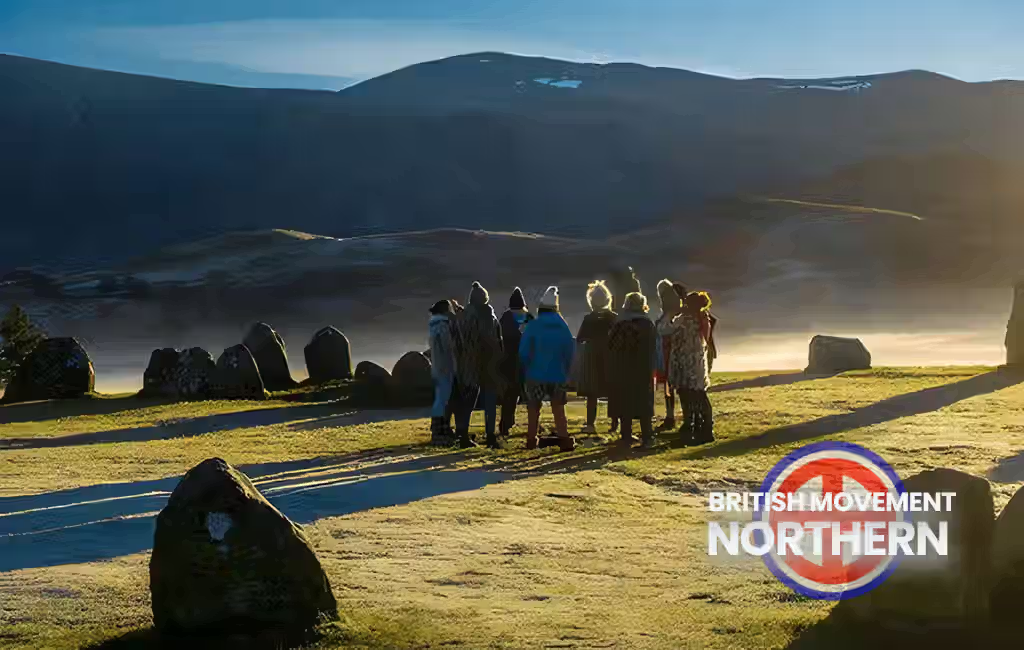
All Images: Stock image. People celebrating the sunrise during the winter solstice at Castlerigg Stone Circle near Keswick in Cumbria.
The British Movement welcomes articles for possible inclusion on this site from members and supporters across the North of England. Please remember that we have to operate within the laws of this country; we will not include any content that is against the current laws of the United Kingdom. News reports should be topical and relevant to the regions covered by this website.