


We have received this post from one of the attendees at the recent Roman Festival, explaining the origins and development of Castleford. We would urge any comrade who can visit Castleford to pay a visit to the museum, located above the library in the town centre (Carlton St, Castleford, WF10 1BB).
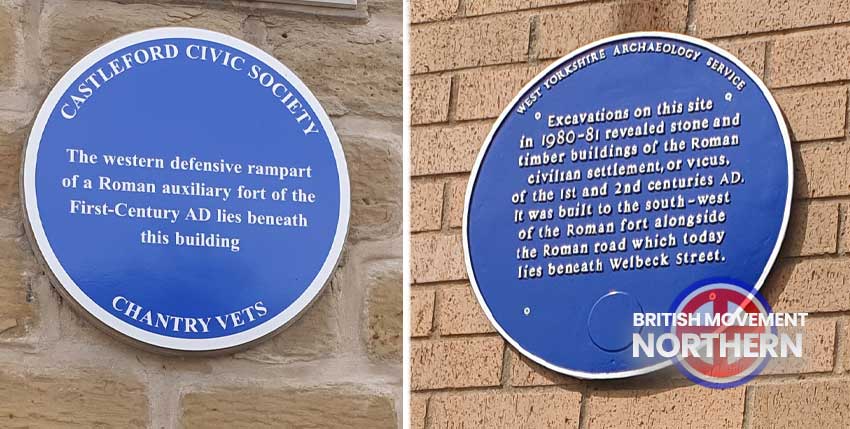
Recently, a group of BM comrades visited the ancient Roman settlement of Lagentium during the town’s annual Roman Festival. The day-long festival provides an opportunity for locals and visitors to learn more about the area’s Roman past. The Roman fort was situated beneath what is now the town centre, meaning that shoppers are literally walking on history as they go about their daily business.
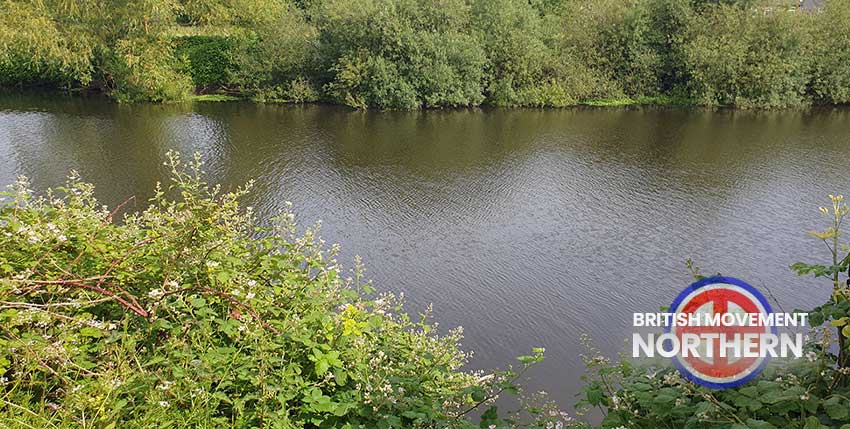
Our group, which included the National Secretary Steve Frost who has an MA in history (pictured above at the place where the Roman Legions forded the river), were given a tour of the area by a local BM member.
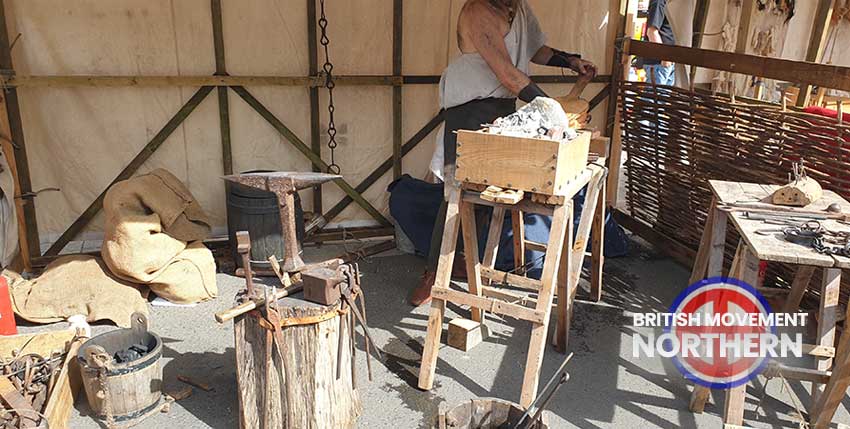
Lagentium is the name most often used today for the Roman fort and settlement that became the town of Castleford in West Yorkshire. But what does the name ‘Lagentium’ mean? ‘Lag-‘ has been interpreted as referring to many things: lakes, swordsmen, or glass bottles. Never one to miss a trick, the local Wetherspoons pub is named the Glassblower.
Castleford (Cas or Cas Vegas to the locals) is best known for its strong mining heritage and rugby league, and along with Featherstone, Knottingley, Normanton, and Pontefract, makes up the historic mining settlements in the eastern part of the City of Wakefield metropolitan district, known locally as the “Five Towns”. Unfortunately, it is also saddled with Yvette Cooper, the Labour Foreign Secretary, who hopefully will be out on her ear come the next General Election.
The original locals were the Brigantes, a formidable Iron Age tribe that dominated a vast territory in what is now Northern England long before the Romans set foot in Britannia. Their realm, known as Brigantia, encompassed the modern counties of Northumberland, Yorkshire, County Durham, Derbyshire, Nottinghamshire, Cheshire, Lancashire, Staffordshire, as well as parts of Cumberland and Westmorland.
The Brigantes faced two crushing defeats at the hands of the Romans, first in A.D. 50 and again in A.D. 71, before ultimately succumbing to Antoninus. During his reign, they experienced even further loss of their territory to Roman expansion.
Roman Castleford was established around 71 AD as a strategic fort during the invasion and conquest of northern England. Roman forts were always built next to a river, so a shallow crossing point on the River Aire (Yorkshire’s primary river) was the natural place to settle. Rivers provided water and also a defensive barrier.
The first Roman forts built were primarily constructed from timber, turf, and earth. Designed for rapid deployment, these defensive bases used pre-cut wooden frameworks and defensive ditches to secure newly conquered territories before later being upgraded.
Housing a garrison of 600 soldiers, the Lagentium fort quickly became a magnet for local traders looking to capitalise on the influx of military personnel. This phenomenon was typical at Roman forts. As a result, a bustling settlement emerged nearby, catering to the troops with food, drink, entertainment, and more.
It was standard practice for units of the Roman army to build their own forts, a practice that reflects their discipline and organisation. They would often stamp their work with unique inscriptions, which allows historians to identify which army unit constructed and was stationed at the fort in Castleford.
Archaeological finds like roof tiles stamped ‘C IIII G’ at Castleford Museum prove the fort of Lagentium was built by the Fourth Cohort of Gauls, a mixed unit of 600 infantry and cavalry.
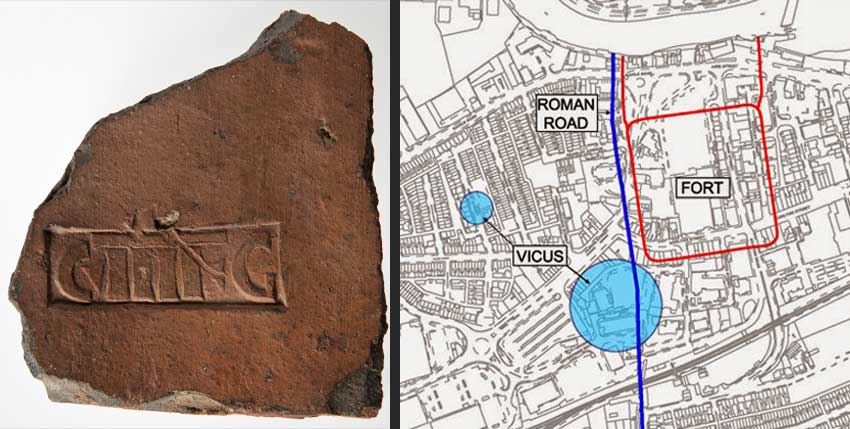
The Fourth Cohort was initially recruited from the tribes in northern France, conquered by Julius Caesar. Auxiliaries were strategically stationed away from their native lands to prevent any inclination toward local uprisings. As time passed, the recruitment process expanded to various locations, causing a gradual disconnection from their original homelands. The troops responsible for constructing Castleford likely originated from tribes in southern Britain.
Auxiliaries were non-citizen soldiers, comprising free men from the lands controlled by Rome. After dedicating 25 years to military service, these individuals earned their Roman citizenship, granting them the freedom to leave the army. With citizenship came enhanced legal and tax rights, elevating their status significantly.
By 100 AD, the Romans had firmly established control over Yorkshire, and Lagentium was thriving. With the Roman soldiers redeployed to other regions, the area maintained its prosperity. Unlike typical garrison towns that withered after the departure of troops, Castleford continued to flourish, demonstrating its resilience and vitality. Castleford’s success came from being part of the supply chain for the Roman army.
Lagentium became an important manufacturing centre, making the luxury goods of the time. It was also a key stop in the Roman Empire’s messaging network.
Supplying The Empire
These clay moulds provide important evidence of the town’s continued prosperity. They were used to mass-produce bronze spoons, and large numbers of them have been found in Castleford. This suggests that spoon-making was carried out on a large scale, with thousands of spoons likely being produced during the Roman period.
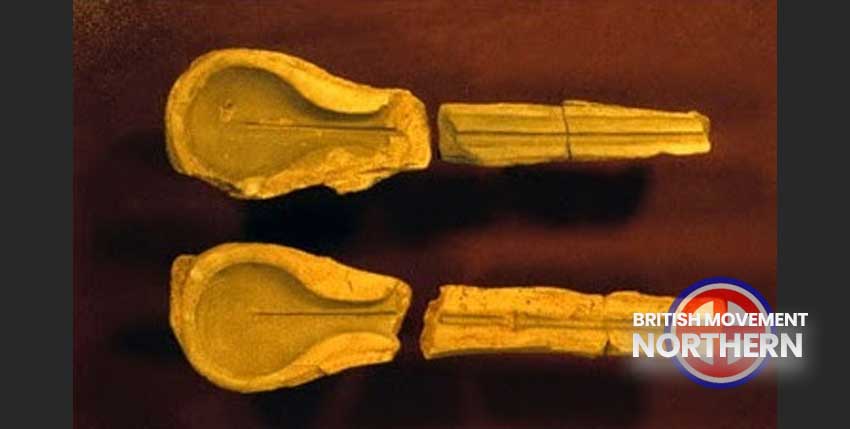
Archaeologists have also found evidence that Castleford was an important centre for metalworking. Alongside the spoon moulds, they have discovered moulds used to make bronze flasks, as well as unfinished brooches. These items were commonly used by Roman soldiers, suggesting that the town may have helped supply equipment to the military.
Castleford’s success was probably due in part to its location. As a port, it was linked to trade routes across the Roman Empire, including the Mediterranean. The town was also located on the main road between London and York, making it an important stop for travellers and merchants. Together with its manufacturing industries, these advantages helped make Castleford an important economic centre.
Later History
The name Castleford itself began as ‘Ceasterforda’, part of the manor of ‘Hoctun’ in the Domesday Book. ‘Hoctun’ became ‘Houghton’, and finally Glasshoughton, an area of Castleford that includes Junction 32 and the Escape entertainment complex.
Credits:
Main Image: Steve Frost (in an Under The Sunwheel t-shirt!), stood at the point where the Roman army crossed the River Aire in their conquest of Northern England. During those times, the river would have been shallower and spread out over the surrounding fields.
Other Images: BM Northern, except images credited to the Castleford Museum.
The British Movement welcomes articles for possible inclusion on this site from members and supporters across the North of England. Please remember that we have to operate within the laws of this country; we will not include any content that is against the current laws of the United Kingdom. News reports should be topical and relevant to the regions covered by this website.