
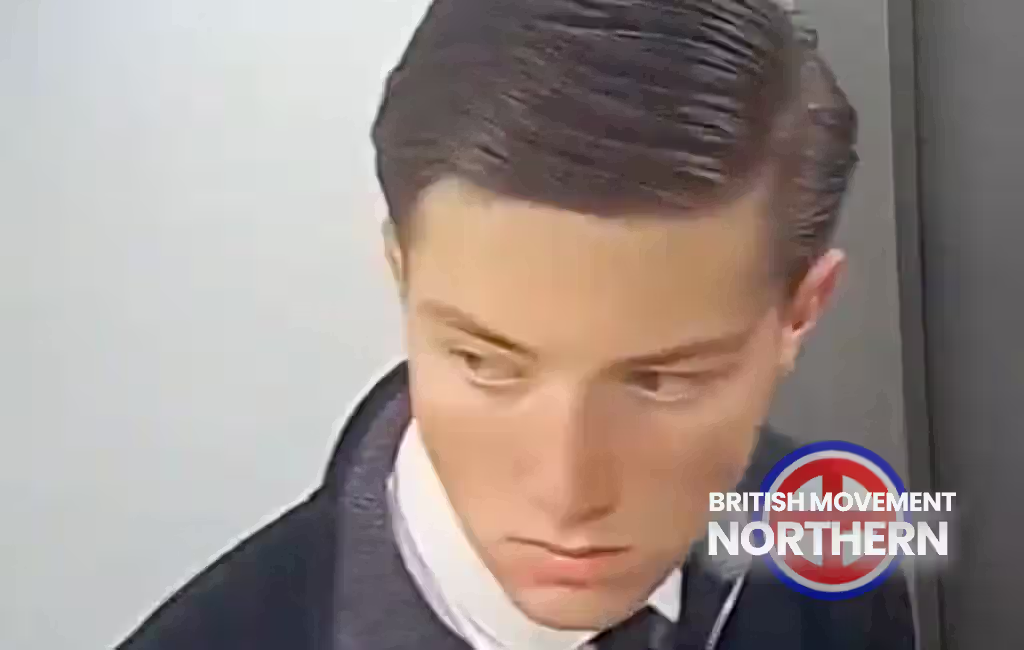
By now, many millions of people will have watched the distressing police bodycam of the last moments of 18-year-old Henry Nowak. The police footage shows the appalling treatment he received at the hands of officers from the anti-racist Hampshire police.
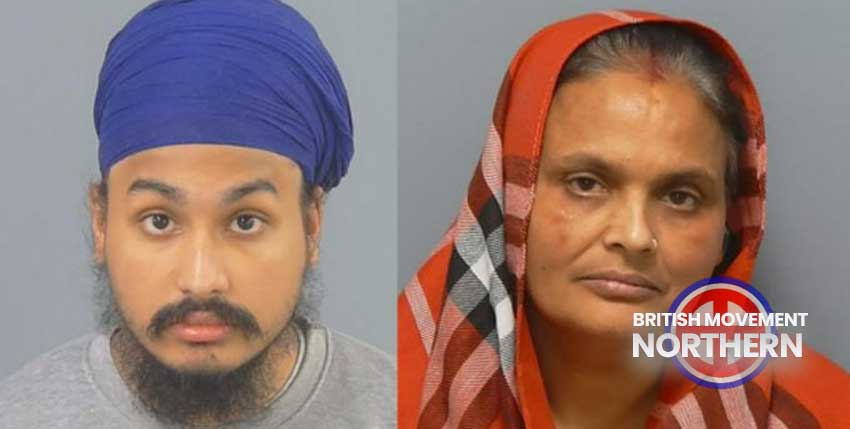
Henry, from Essex, a Polish-British student who was studying finance at the University of Southampton, was stabbed as he walked home after a night out with his football team mates. He was stabbed five times, including a fatal chest wound, by 23-year-old Vickrum Digwa. Digwas, a Sikh, was legally carrying a 21cm kirpan, a privilege extended to no other group in the UK.
The police were called by the murderer’s brother, who alleged that they had been attacked and racially abused by a drunken White boy. It turned out that Henry was sober, having drunk less than the legal limit for driving a car.
As Henry lay drowning in his own blood, Digwa falsely claimed that he had been racially abused (citing a bruised eye). Police officers pulled Henry across the gravel, handcuffed him and read him his rights rather than rendering immediate aid. The footage released by the force shows him pleading, “I’ve been stabbed”, and an officer replying, “I don’t think you have mate”.
Three wounds were located on the chest and lower abdomen, two wounds were located on the back of his leg, and he had also sustained a laceration to his face during the attack on Belmont Road in Southampton.
The facts of the case are as follows:
Henry was stabbed at 11:30 pm, and was not pronounced dead until 67 minutes later (12:37 am). Digwa’s brother (who arrived shortly after the attack) phoned 999, he did not phone an ambulance; he phoned the police, alleging Henry had attacked them.
In the call, which was read out at Southampton Crown Court, the brother can be heard saying: “We’ve just got attacked racially by some white person. He’s physically attacked my brother, we’re Sikhs, we wear a turban and he’s just attacked my brother. We’re restraining him right now because he’s just attacked my brother and took my brother’s turban off. He’s verbally attacked my brother racially. I’m not having this as a regular occurrence, I live here, I’m not having this a regular occurrence. He ain’t fighting people, he’s racially attacking people, that’s what he’s doing. Nah, he sees some brown people, that’s what it was.”
They were restraining Henry until the police arrived (Digwa stole Henry’s phone so he couldn’t get help). When the police arrived, Digwa’s father was holding Henry against a wall (his father said: “He keeps dropping down, so I am just trying to keep him up”. There was also a visible blood trail, but it is unknown when officers first noticed it (different sources described it when the police entered the scene, another was after Henry passed out). His mother removed the murder weapon from the scene.
People need to understand that what happened to Henry Nowak was not simply the result of an accident or incompetence. It reflects deeper problems within a system that operates against White people and is reinforced by a police force with the same Critical Race Theory institutional bias.
Police later apologised – unconvincingly, particularly after the leaked bodycam footage emerged. Robert France, the Hampshire force’s deputy Chief Constable, said: “This case is an absolute tragedy. I’m sorry that Henry’s life couldn’t be saved that night, and I’m sorry that he was handcuffed and arrested. He was the victim.” Crocodile tears are the words that come to mind.
In his famous ‘Rivers of Blood’ speech delivered to a Conservative Association meeting at the Midland Hotel in New Street, Birmingham on April 20, 1968, Enoch Powell said the following:
“I am going to allow just one of those hundreds of people to speak for me: “Eight years ago in a respectable street in Wolverhampton a house was sold to a Negro. Now only one white (a woman old-age pensioner) lives there. This is her story. She lost her husband and both her sons in the war. So she turned her seven-roomed house, her only asset, into a boarding house.
“She worked hard and did well, paid off her mortgage and began to put something by for her old age. Then the immigrants moved in. With growing fear, she saw one house after another taken over. The quiet street became a place of noise and confusion. Regretfully, her white tenants moved out.
“The day after the last one left, she was awakened at 7am by two Negroes who wanted to use her ‘phone to contact their employer. When she refused, as she would have refused any stranger at such an hour, she was abused and feared she would have been attacked but for the chain on her door.
“Immigrant families have tried to rent rooms in her house, but she always refused. Her little store of money went, and after paying rates, she has less than £2 per week. “She went to apply for a rate reduction and was seen by a young girl, who on hearing she had a seven-roomed house, suggested she should let part of it.
“When she said the only people she could get were Negroes, the girl said, “Racial prejudice won’t get you anywhere in this country.” So she went home. “The telephone is her lifeline. Her family pay the bill, and help her out as best they can.
“Immigrants have offered to buy her house – at a price which the prospective landlord would be able to recover from his tenants in weeks, or at most a few months. She is becoming afraid to go out. Windows are broken. She finds excreta pushed through her letter box. When she goes to the shops, she is followed by children, charming, wide-grinning pic*********
“They cannot speak English, but one word they know. “Racialist,” they chant. When the new Race Relations Bill is passed, this woman is convinced she will go to prison. And is she so wrong? I begin to wonder.”
Powell also mentions talking to a constituent in his Wolverhampton ward, in which he says: “In this country in 15 or 20 years’ time the black man will have the whip hand over the white man.”
Powell’s speech was almost sixty years ago. It is as relevant today as it was then.
Credits:
Main Image: Henry Nowak on CCTV shortly before being fatally stabbed. Wikimedia Commons via Courthouse News
Lower Image: Vickrum Digwa and his mother, Kiran Kaur, 53, who was found guilty of assisting an offender. Hampshire & Isle of Wight Police.
The British Movement welcomes articles for possible inclusion on this site from members and supporters across the North of England. Please remember that we have to operate within the laws of this country; we will not include any content that is against the current laws of the United Kingdom. News reports should be topical and relevant to the regions covered by this website.